

We made it through inflation week with the S&P 500 notching three fresh all-time highs that won’t be revised away.
Economic data, on the other hand, does get revised — and sometimes in a big way. Just last week, we found out the US actually added 911k fewer jobs than first reported over the 12 months through March 2025. That’s about 76k per month wiped off the books — the biggest downward revision since 2002.
A year ago, a similar revision pushed the Fed to cut rates by 50bps right away. Today, though, the odds of such a jumbo cut look far slimmer, with inflation showing signs of reacceleration — whereas last year, the Fed was easing against a backdrop of disinflation.
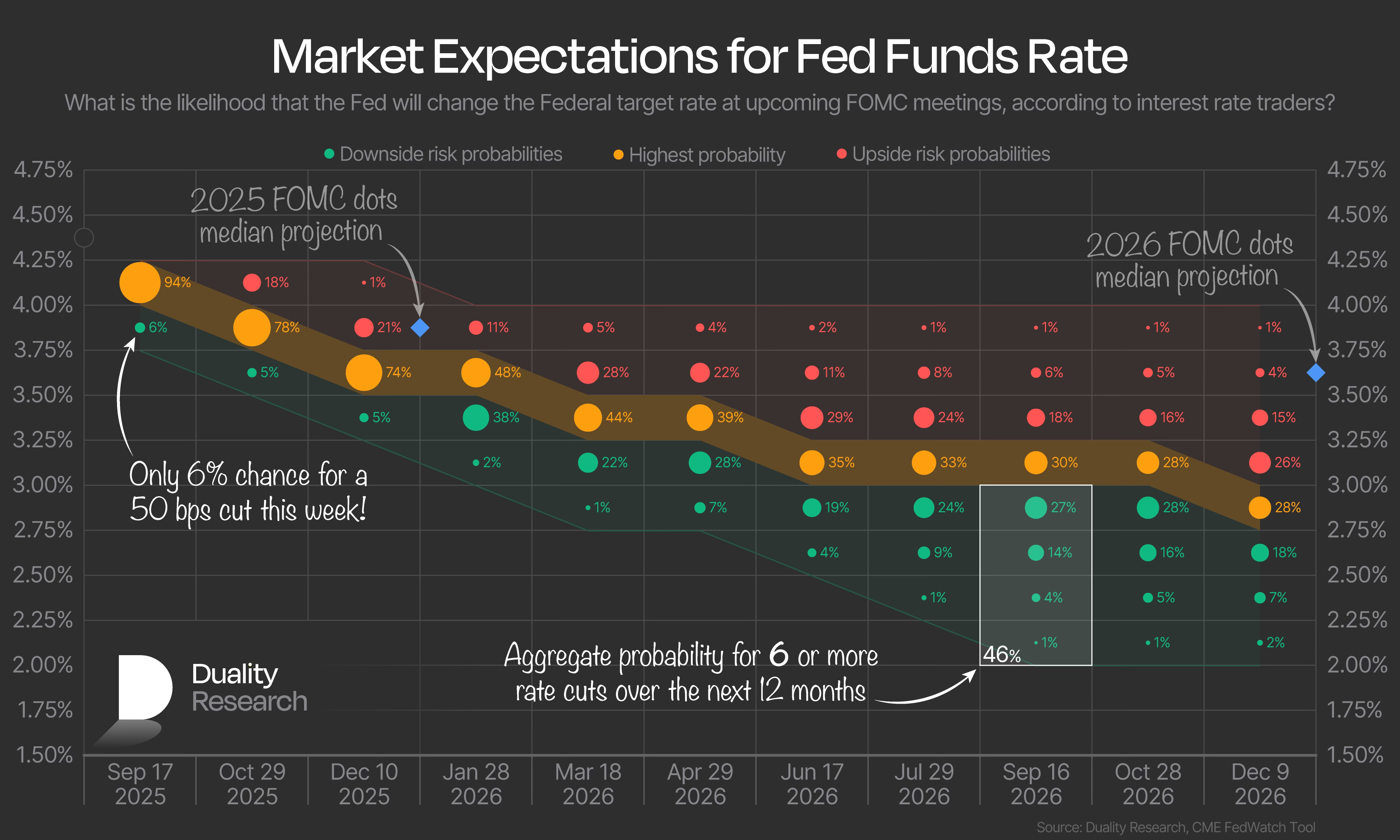
What we’re observing after these revisions is that the narrative of the US economy being in a much worse state than previously expected is really starting to take hold. The question everyone’s asking now is whether the 5-6 rate cuts the market expects over the next year will be enough to revive economic activity — or if the slowdown has already gone too far.
If you remember what we said last week, this big revision shouldn’t rattle anyone. Nonfarm Payrolls are old news by the time they hit the tape — they are one of the slowest, most backward-looking data points we get every month. If you actually want to know what’s happening in the job market, the better signals are weekly Jobless and Continuing Claims.
Right now, Continuing Claims is the one to watch. Think of it as the net scorecard for hiring vs firing. If the number goes up, more people are losing jobs than getting them; if it goes down, more jobs are being added than lost.
Sure, Continuing Claims jumped by 100k-plus back in April and May, but that was then. For the past three months, things have leveled out. In fact, today’s 1.939 million reading is lower than where we were at the end of May (1.951 million). This underpins the point we made last week:
While lagging data is pushing the Fed toward easing, the real-time indicators are telling us the damage isn’t getting worse. Which means we get to enjoy the bump in expected rate cuts… without needing to stress too much about the jobs picture.
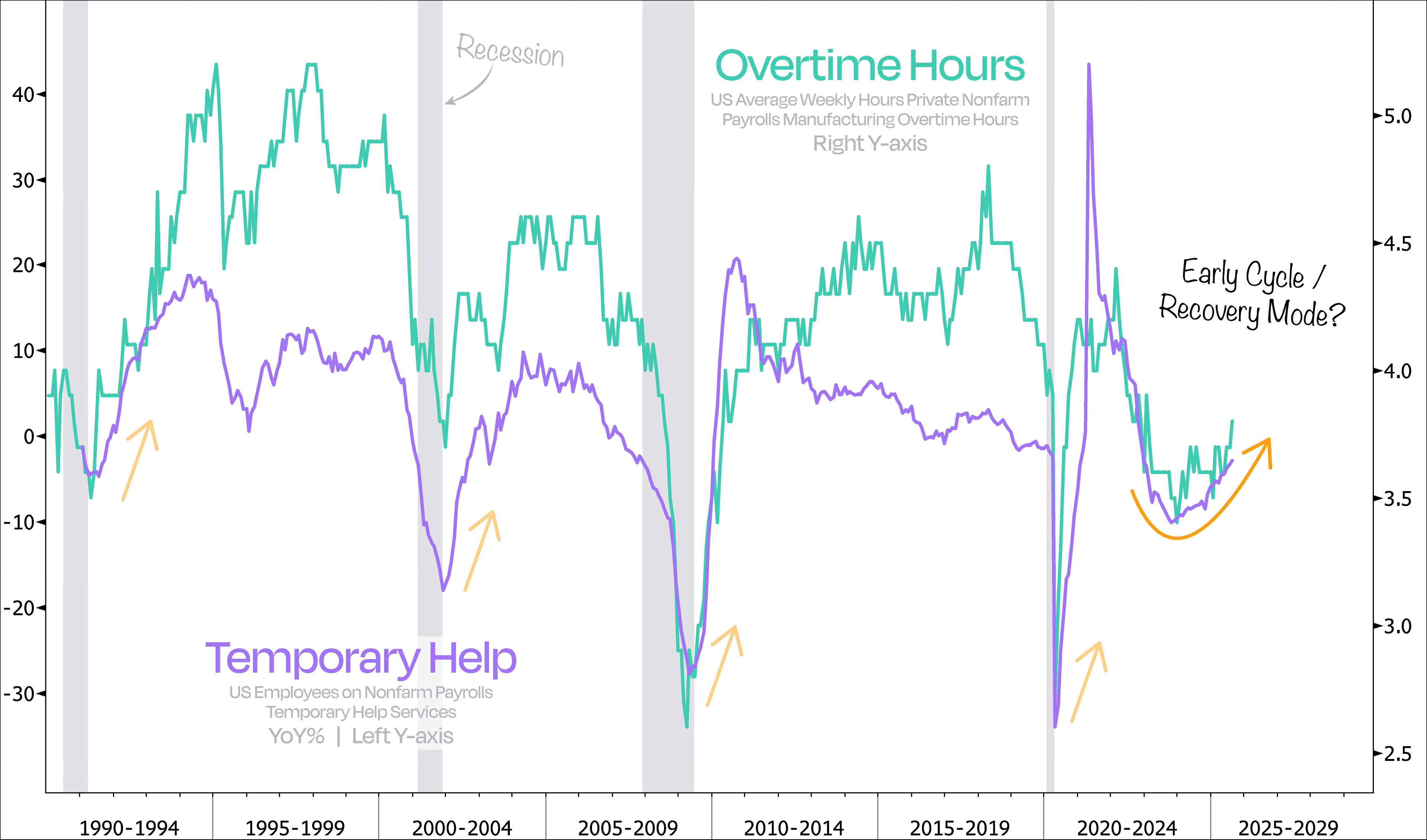
The layoffs already happened. Companies are in wait and see mode. And the early signs actually suggest the next move could be back toward hiring. As Julien Bittel recently pointed out, workers are putting in more overtime, and the year-over-year change in Temporary Help Services has bottomed and is turning higher.
Historically, these are classic early-cycle signs. Businesses see more activity, so they add hours and temps before committing to costly full-time hires.
As our next chart shows, that pattern is exactly what’s emerging today.
The reason why we’re touching on the labor market again is because we think the recent NFP miss — and the massive negative revision to prior jobs — has set up a costly crossroads for investors.
We’re seeing more and more investors positioning for a Fed that will cut into a slowing economy, wondering if even aggressive easing will be enough to turn things around. Some signs of that bearish mood:
Rising demand for hedges, with costs at their highest since the 2022 bear market.
And bears outnumbering bulls for the sixth straight week in the latest AAII survey — with the most pessimistic reading since early May.


Yet, the data we follow is actually flashing green. The market and labor trends suggest momentum is building:
The NYSE just saw the most stocks hitting new 52-week highs since last November — breadth is expanding.
Staples are finally hitting all-time relative lows vs the S&P 500, both on a cap- and equal-weighted basis.
And high yield credit spreads are on the tights.
What we’re trying to say is that the Fed is about to cut rates into an economy that’s already showing early signs of labor market recovery. This will remove the interest rate drag on the ISM and help spark a broader risk-on move in markets.
But, as is often the case, the most bearish sentiment seems to show up just before the next leg higher.
The market has a way of surprising the greatest number of people.
So, looking at the setup now, with the Fed likely to ease significantly, the real question isn’t whether to worry — it’s whether we’re holding enough risk assets for the next 6–12 months.