

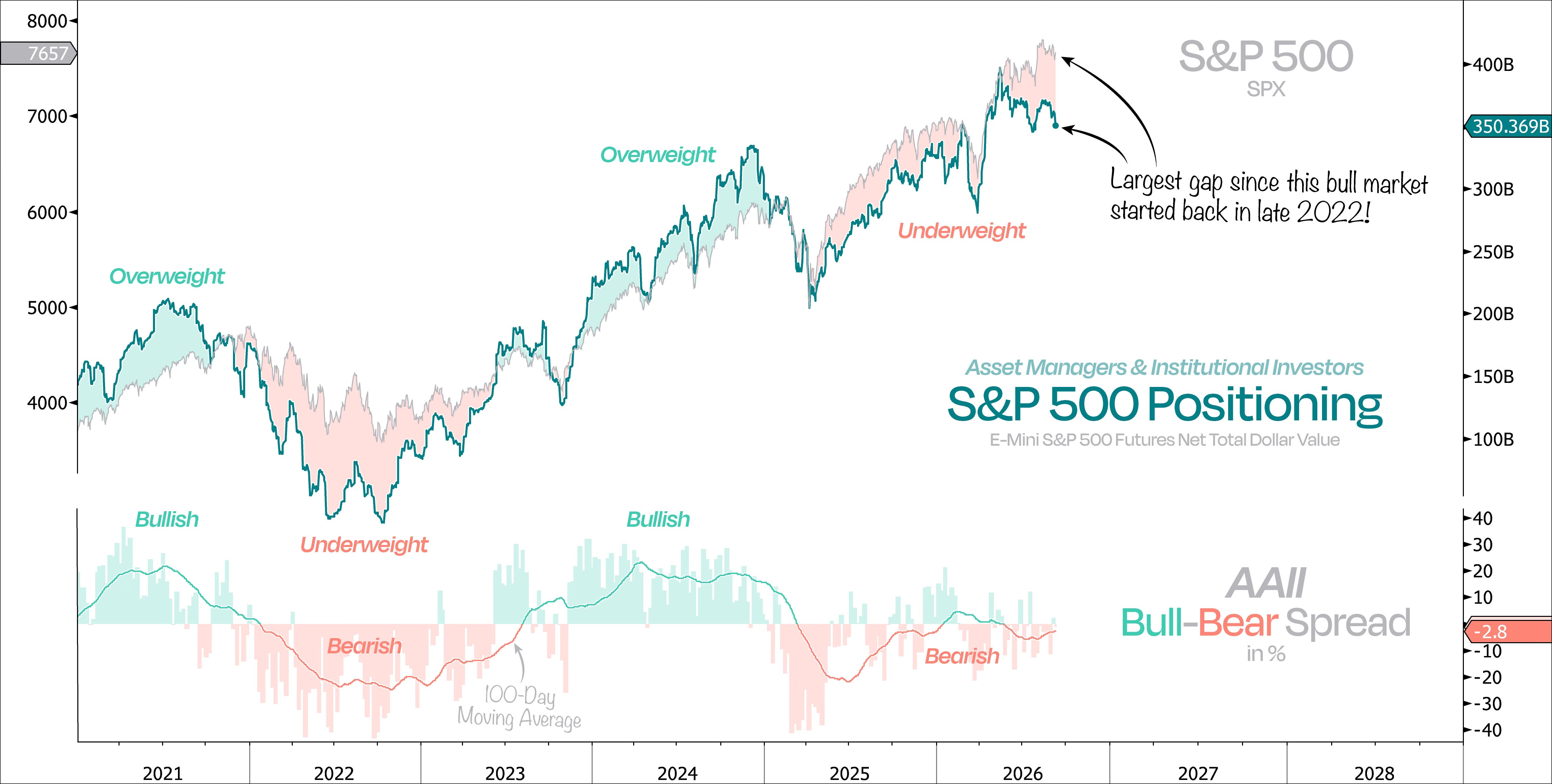
After we highlighted last week how positioning among institutional investors had become extremely light, we now know that sentiment was telling a very similar story heading into the FOMC.
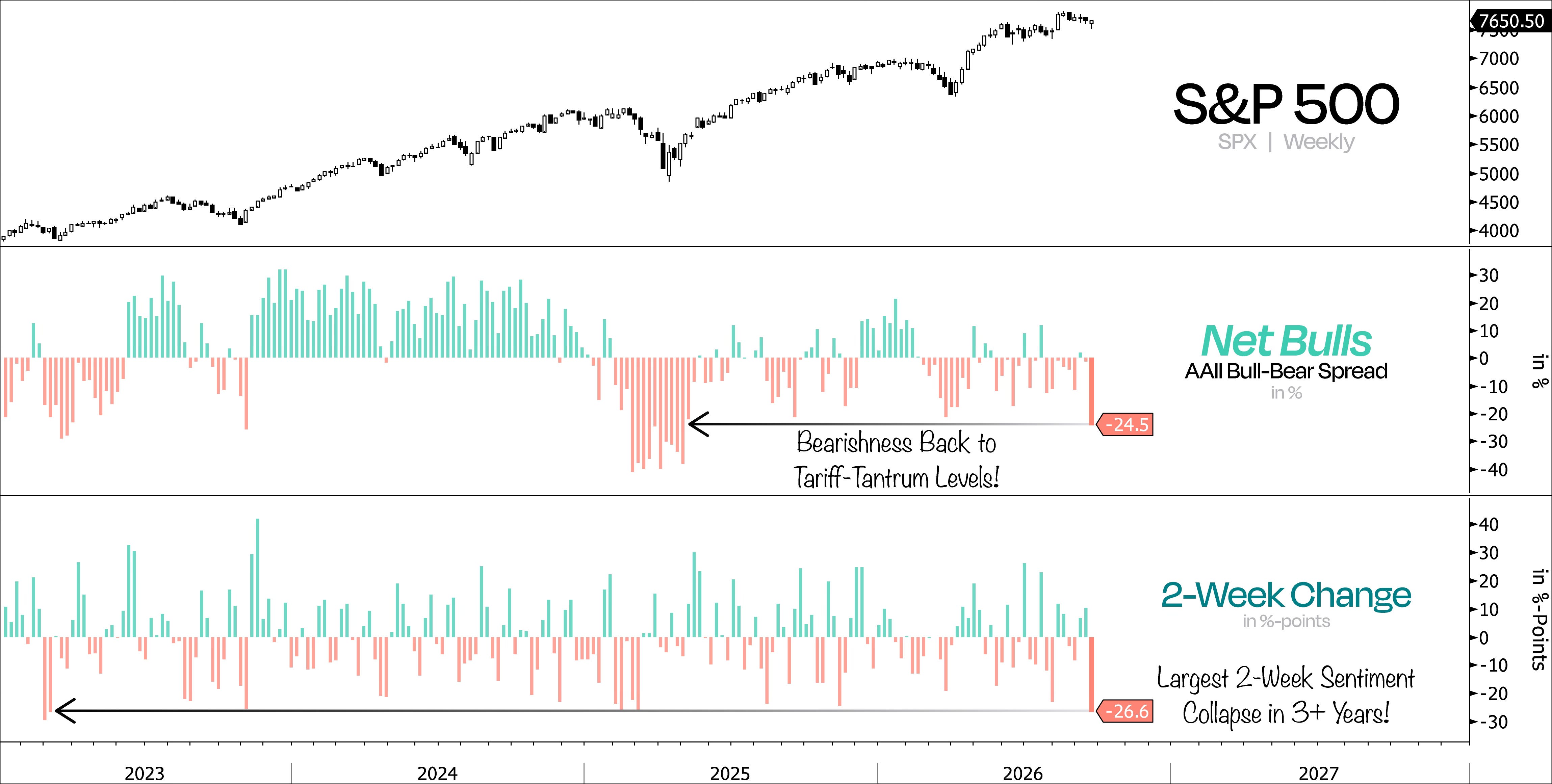
Net bulls had fallen by the most over any 2-week stretch in more than three years, pushing investor sentiment to its most bearish reading since the tariff tantrum in early 2025. In other words, investors weren’t exactly walking into the Fed meeting with their chests out.
As we also said last week, this sort of setup usually results in relatively shallow pullbacks, simply because there isn’t that much positioning left to unwind.
But more importantly, we don’t think the Fed’s overall message was nearly hawkish enough to spark the kind of selloff many investors may have feared heading into the meeting. In fact, we’d argue quite the opposite.
In our last note, we concluded that “if the Fed signals that this is a one-and-done credibility hike, we should expect markets to keep marching higher,” and that “the real paradox may be that a Fed hike is what finally brings down the long end.”
Well... call it two-and-done.
That’s certainly twice as many hikes as we expected, but the more important takeaway is that the Fed does not appear interested in embarking on a full-blown hiking cycle — something we had framed as the most bearish outcome for stocks.
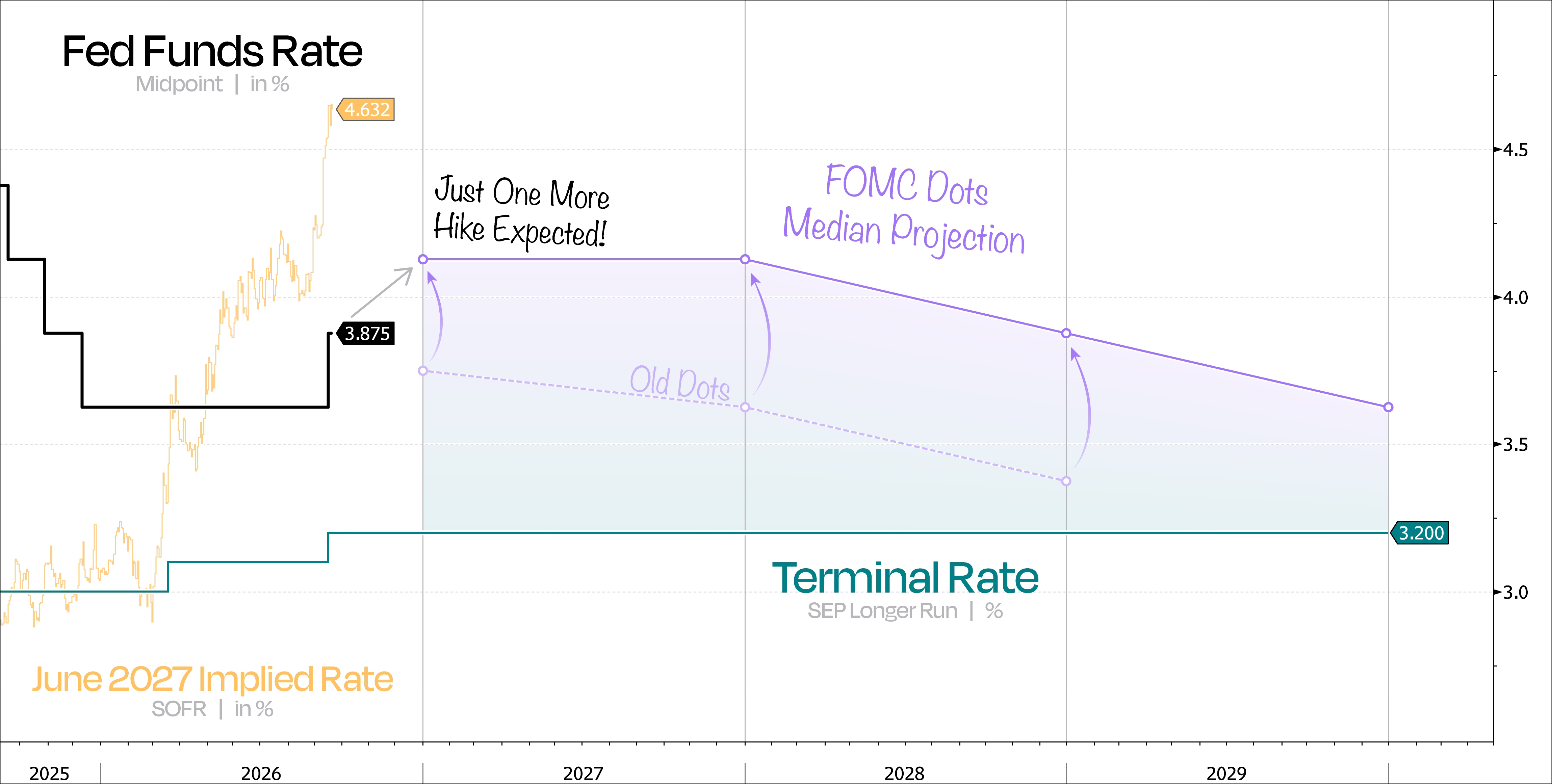
Our next chart shows this pretty clearly. Yes, the median dots moved higher. But after another hike this year, the Fed sees rates essentially holding steady throughout next year before gradually moving lower toward its longer-run rate, which was also bumped up to 3.2%.
Higher for longer? Sure. A new hiking cycle? That’s not what the dots are telling us.
Now, despite this hike — and likely another one — we’ve come across plenty of takes arguing that with financial conditions currently this loose, there’s really only one direction left to go: Tighter.
And we understand where that thinking comes from. Take the Bloomberg US Financial Conditions Index, for example, and financial conditions do indeed look extremely loose.
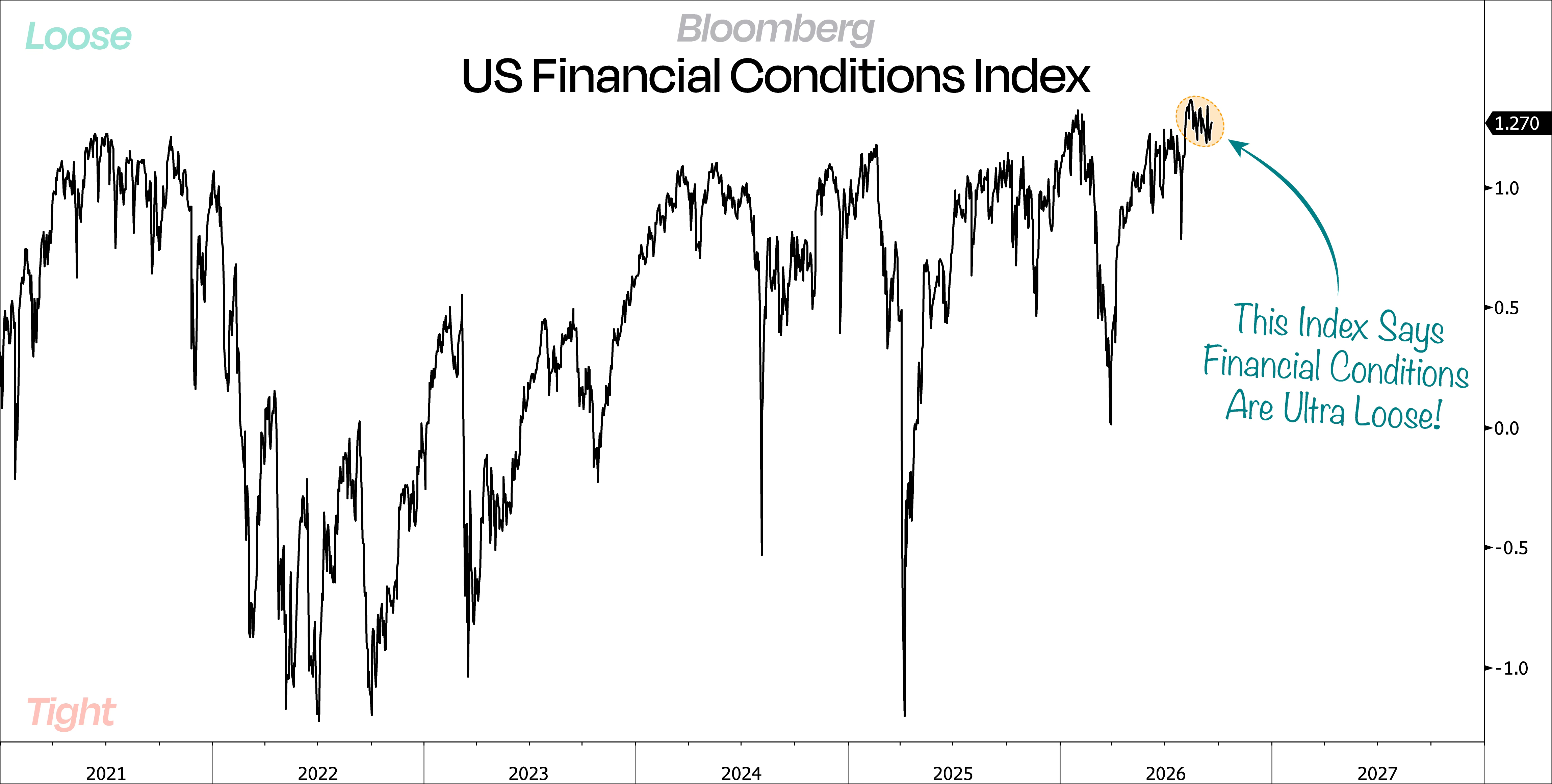
The problem, however, is what actually goes into these indexes.
Typically, they also include equities and credit spreads, which creates a bit of a circularity problem. Stocks rally → financial conditions ease → and suddenly we conclude that easier financial conditions are bullish for stocks, even though the stock rally itself was partly responsible for that easing in the first place.
The same goes for credit spreads, especially high-yield, which are highly intertwined with equity risk appetite. When markets go risk-on, stocks rise and high-yield spreads tighten at the same time. Calling that an independent easing of financial conditions and then using it to explain why stocks are rallying gets us right back into the same circularity problem.
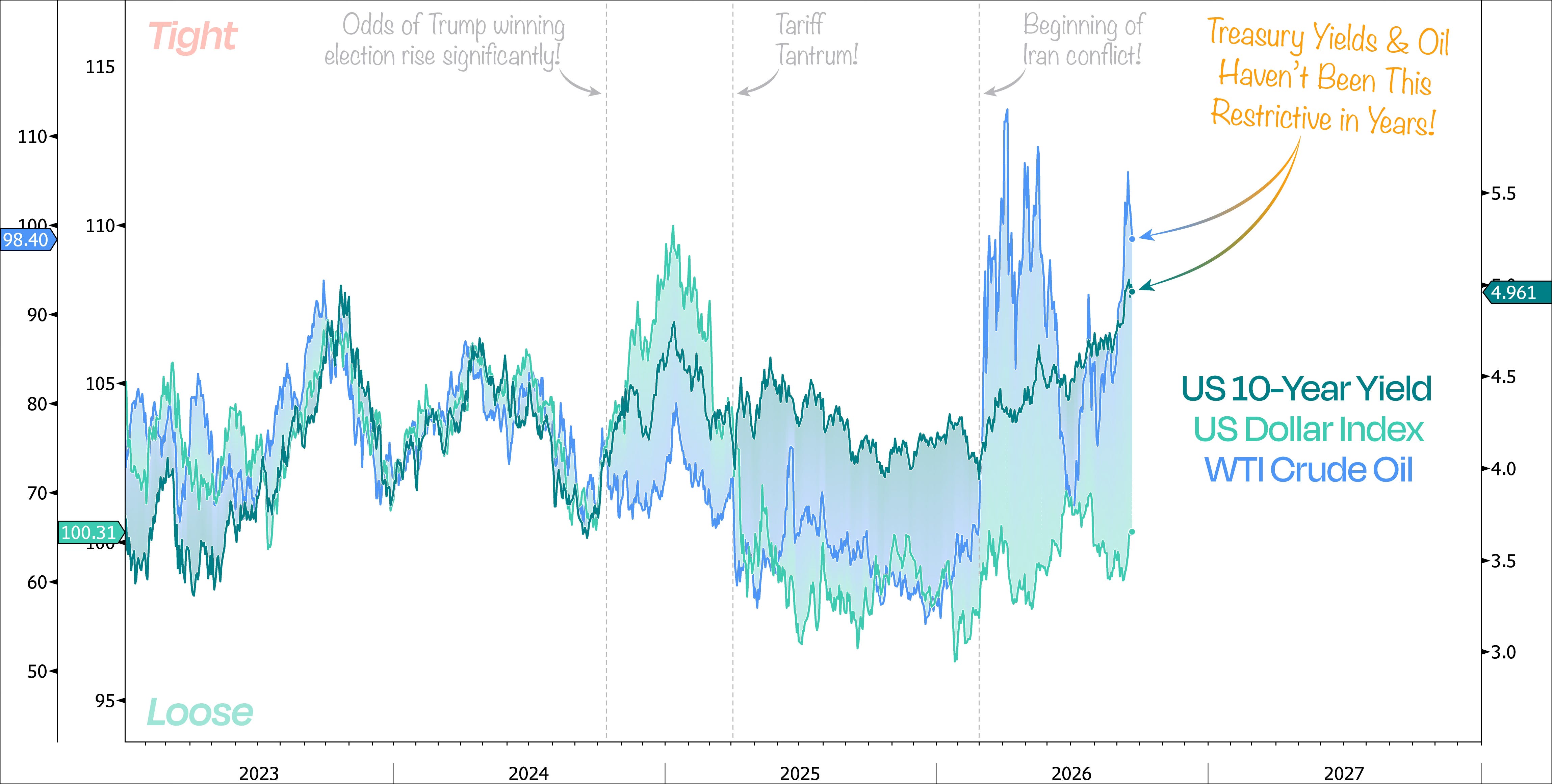
For us, financial conditions are essentially a function of interest rates, oil prices, and the US dollar. And through that lens, the picture looks quite different.
With perhaps the exception of the dollar, none of those are anywhere close to suggesting that financial conditions are ultra-loose right now. In fact, our next chart shows why we think the asymmetry here may actually be more interesting than the consensus narrative suggests.
Could financial conditions tighten further from here? Of course.
But they could also loosen a lot more from current levels — and if they do, that would provide a massive tailwind for risk assets. That’s a possibility traditional financial conditions indexes don’t make nearly as obvious, given they already suggest conditions are historically loose.
With investors lightly positioned heading into Q4, coupled with sentiment sitting at some of the most bearish levels we’ve ever seen with markets this close to all-time highs, we think the table is being set for a pretty decent year-end rally.
Having said all that, we believe it’s time to revisit